

Family health records, kept on the phone that holds them.
FamAid records medications, blood pressure and blood sugar readings, doctors, care tasks, and document references for each member of a household. It runs on Android and stores every record in a local SQLite database. No account. No FamAid server. No sync.
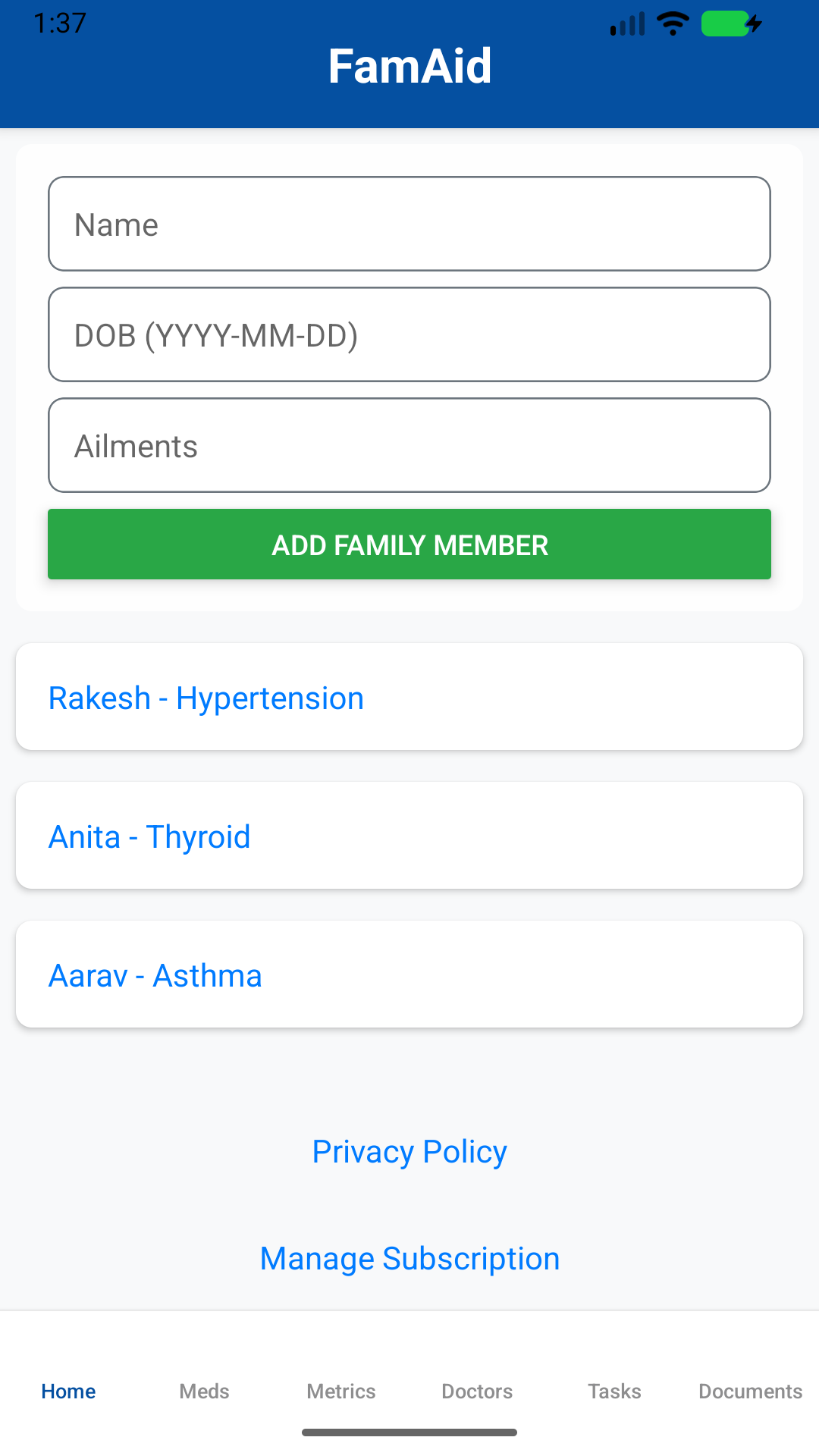
FamAid 1.0.1 · build 3 · Android
Where the record lives
The app has no account system and no Adhishtanam server to send health data to. The two lists below are the complete boundary as shipped in version 1.0.1.
Stays on the device
- Names, dates of birth, relationships, ailments, phone and email
- Medications, dosages, schedules, start and end dates
- Blood pressure and blood sugar readings with timestamps
- Doctors, hospitals, registration numbers, and assignments
- Care tasks and document references
Leaves the device
- Google Play receives purchase and payment data when you buy a plan. Adhishtanam does not receive card details.
- RevenueCat receives an anonymous app user ID, purchase status, and entitlement state to validate the purchase.
- If Android backup is enabled in system settings, the operating system may copy app data to your Google account.
- No health record is sent to Adhishtanam or any analytics service by the app.
What FamAid keeps track of
The app is built around seven SQLite tables: family members, medications, metrics, doctors, doctor assignments, tasks, and documents. Each screen writes to those tables directly.
One profile per person
Name, date of birth, relationship, ailments, phone, and email. Every medication, reading, doctor, and document is linked to a member.
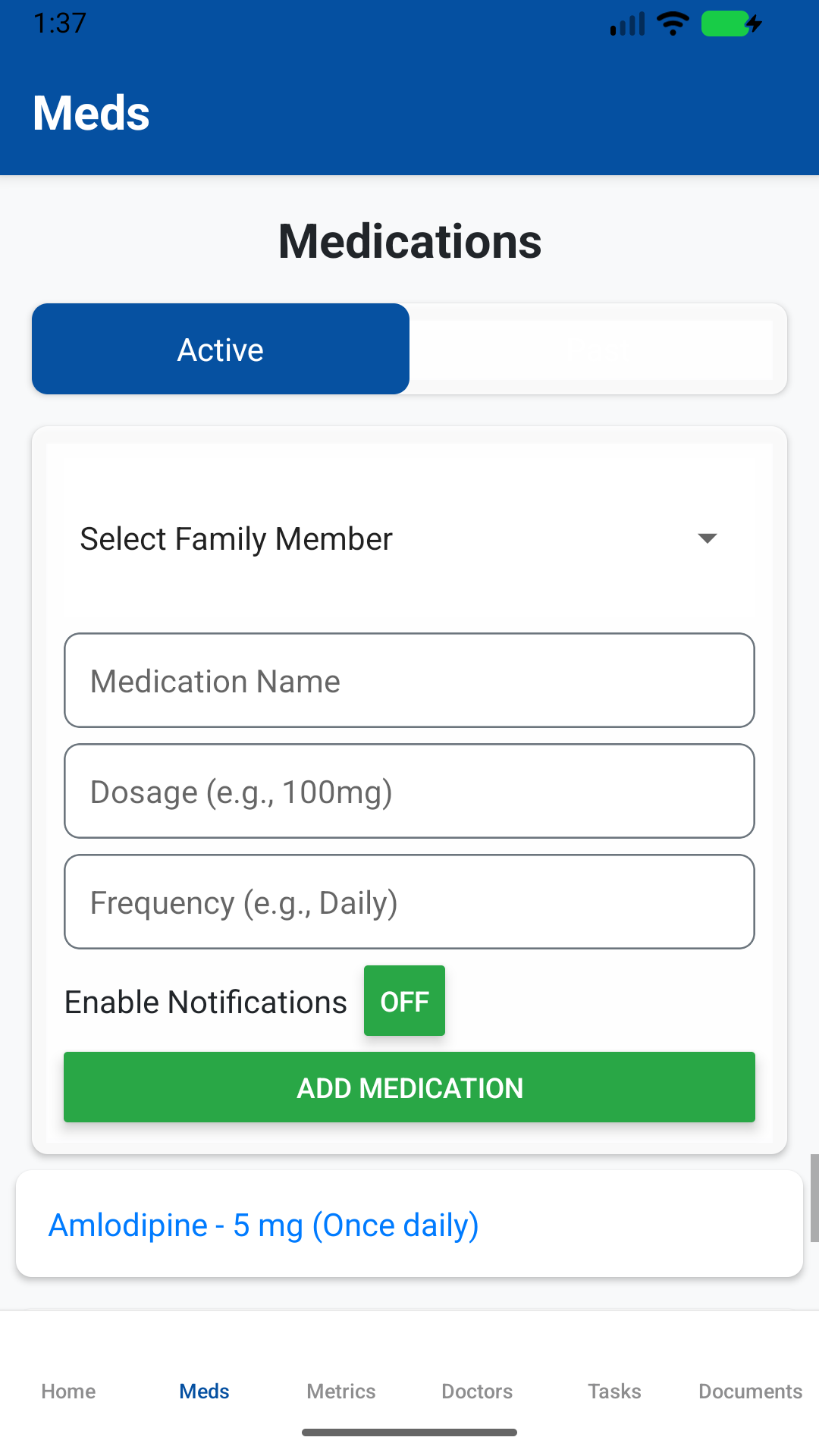
Current and past prescriptions
Medication name, dosage, frequency, start and end dates, notes, and an optional local reminder. Split into active and past lists.
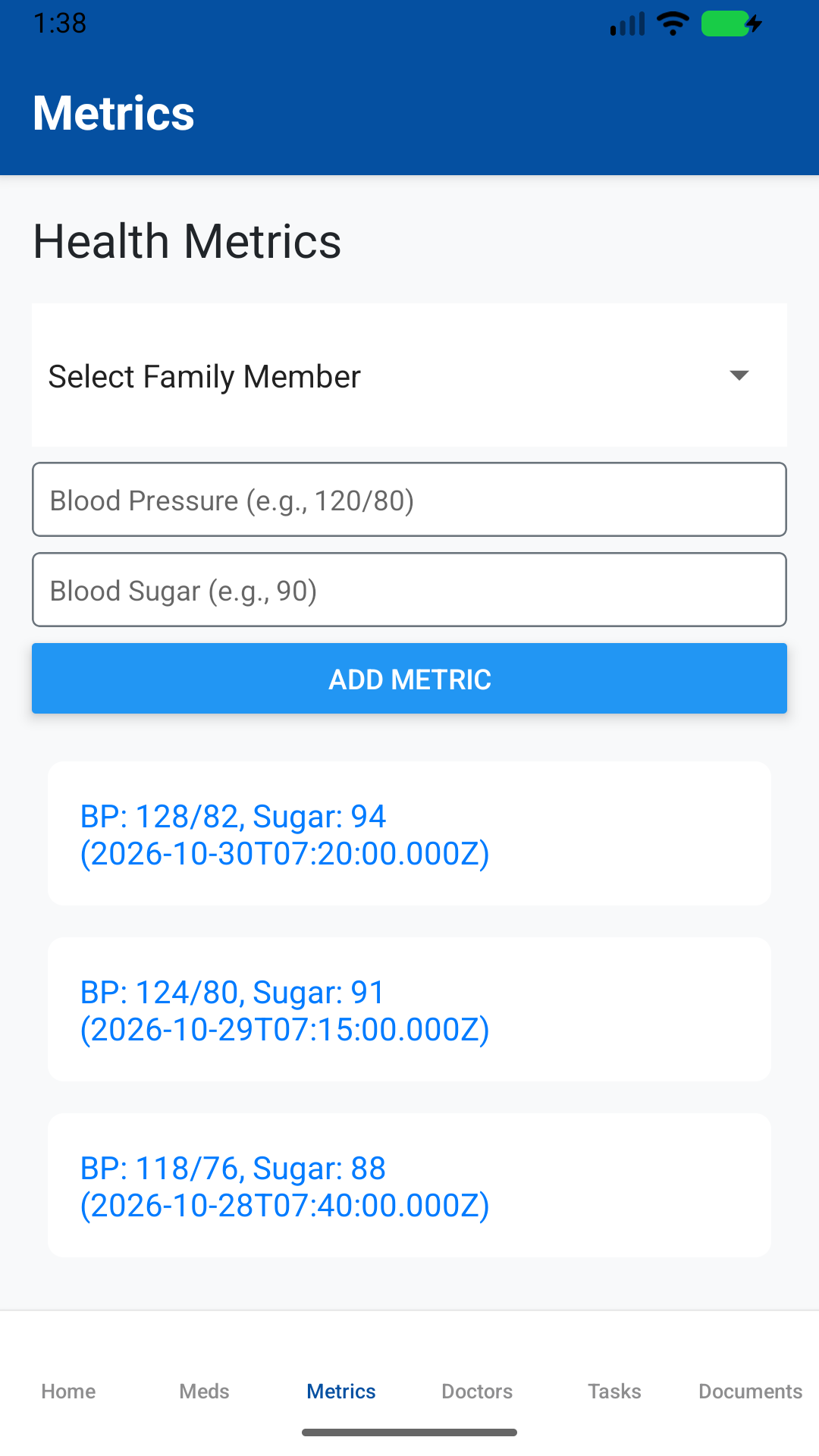
Blood pressure and blood sugar
Readings recorded with a timestamp against a family member, so the history stays in one place instead of a notes app.
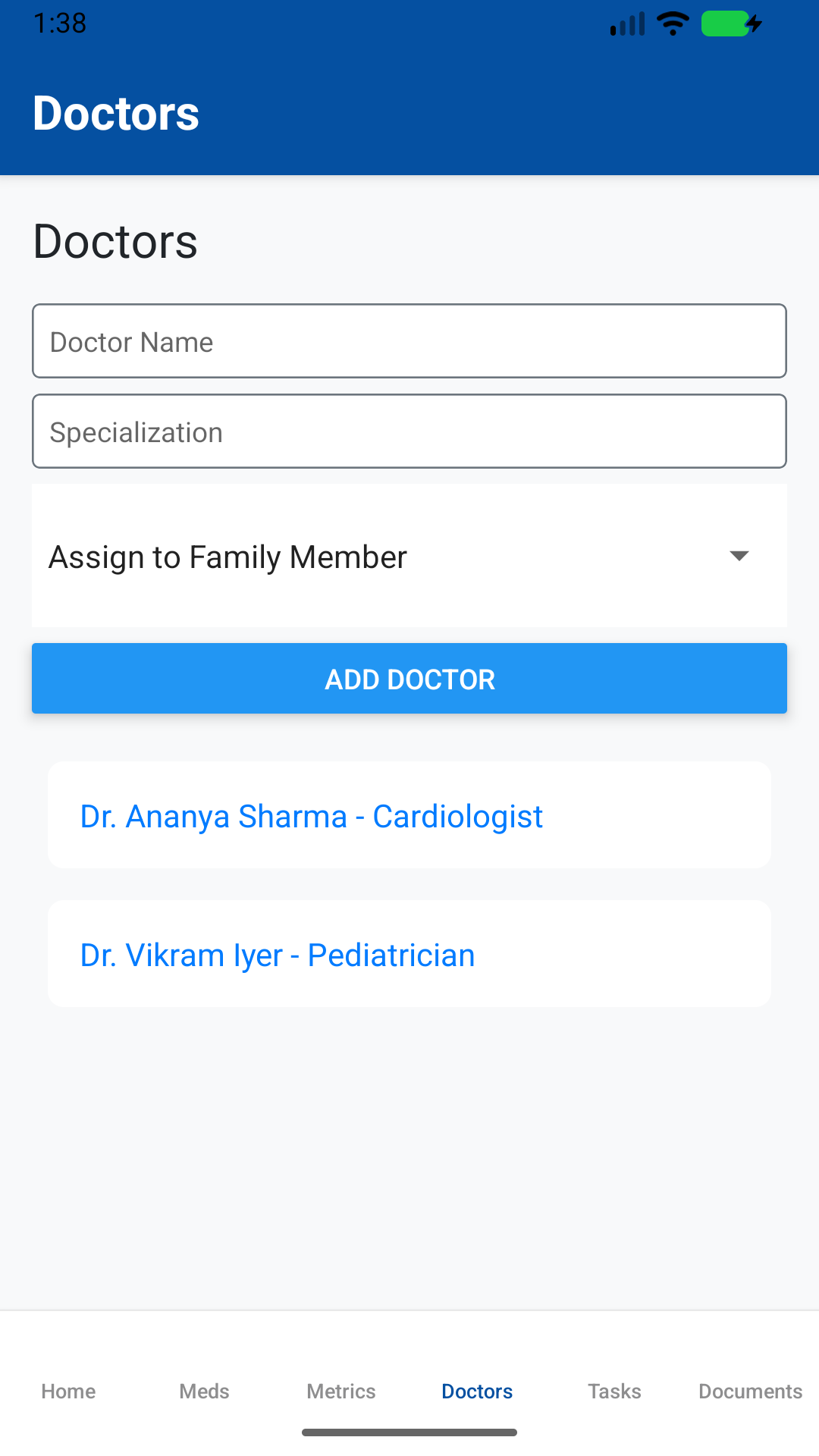
The care team, not a contact list
Name, specialisation, registration number, hospitals, phone, email, and notes. Doctors are assigned to the members they treat.
What still needs doing
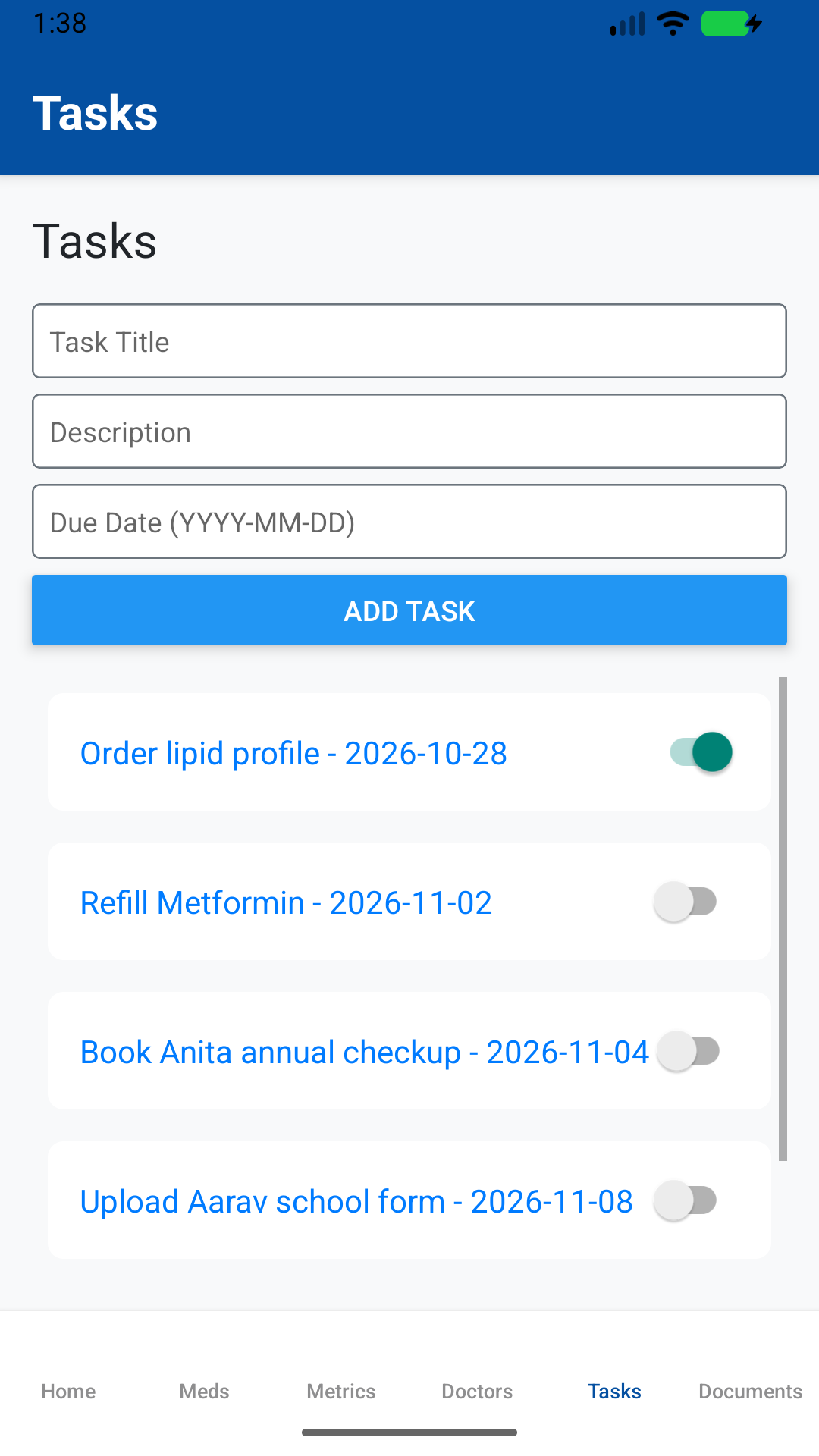
Title, description, due date, and completion state. Used for appointments, tests, refills, and follow-ups.
A document index per member
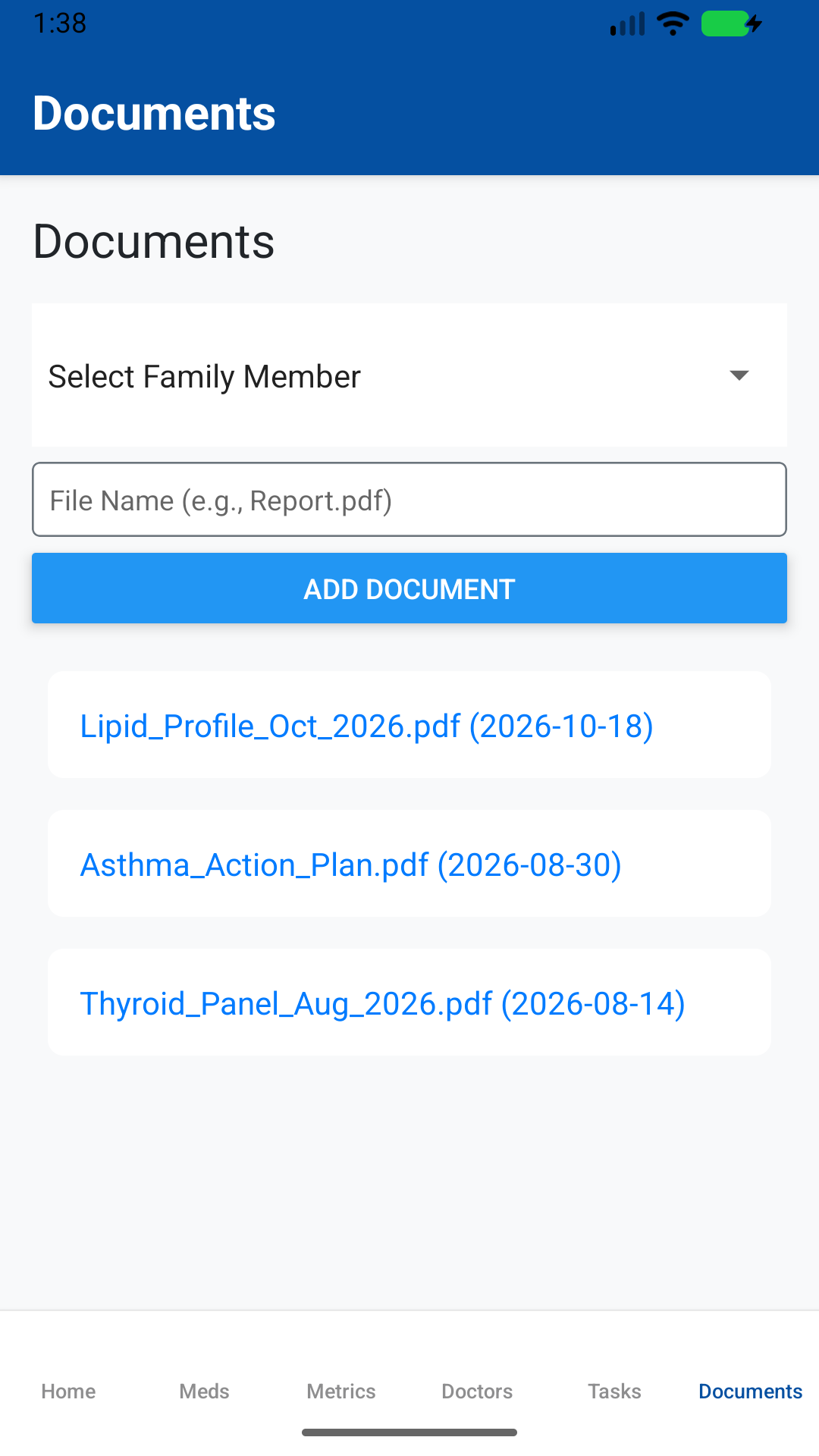
File name, date, and the member it belongs to. The record is in place; importing the file itself is not wired yet.
One member, one view
Opening a member combines their current medications, recent metrics, assigned doctors, and documents into a single profile, so a consultation does not start with four screens.
The app, screen by screen
These are screenshots from the internal Android build, not renders. The interface is deliberately plain: forms, lists, and labels.
In internal testing
FamAid is distributed through Google Play's internal testing track while the purchase flow and data-protection work are finished. Access is granted by invitation.
Premium gating is not enforced in the current build. Every feature is usable without a purchase, and buying a plan does not unlock additional screens yet.
| Plan | US list price | Billing |
|---|---|---|
| Monthly | $4.99 | Auto-renewing · 14-day free trial |
| Annual | $39.99 | Auto-renewing · 14-day free trial |
| Lifetime | $79.99 | One-time purchase |
US list price. Google Play sets local prices in 174 markets. Prices are read from the Play Store at purchase time.
Verified
- TypeScript check passes with no errors
- Expo Doctor passes 18 of 18 checks
- Android bundle exports successfully
- Signed AAB versionCode 3 uploaded to internal testing
- targetSdk 36 and Play Billing 8
- Play products and RevenueCat entitlements active
Open
- End-to-end purchase test with a license tester
- Premium gating — every feature is currently free
- Encryption of the local database at rest
- Real document picker
- Per-medication reminder times
- iOS build and Apple purchase keys
What it does not do yet
- The SQLite database is not encrypted at rest. Protect the phone with a screen lock.
- There is no cloud backup or cross-device sync. Uninstalling the app deletes the record.
- Document entries store a reference and date, not the file contents.
- Reminders use a fixed 24-hour interval, not per-medication times.
- There is no account, so there is nothing to sign in to and nothing to recover remotely.
FamAid is built by Adhishtanam Research LLP · [email protected]